By CUS Editorial Team
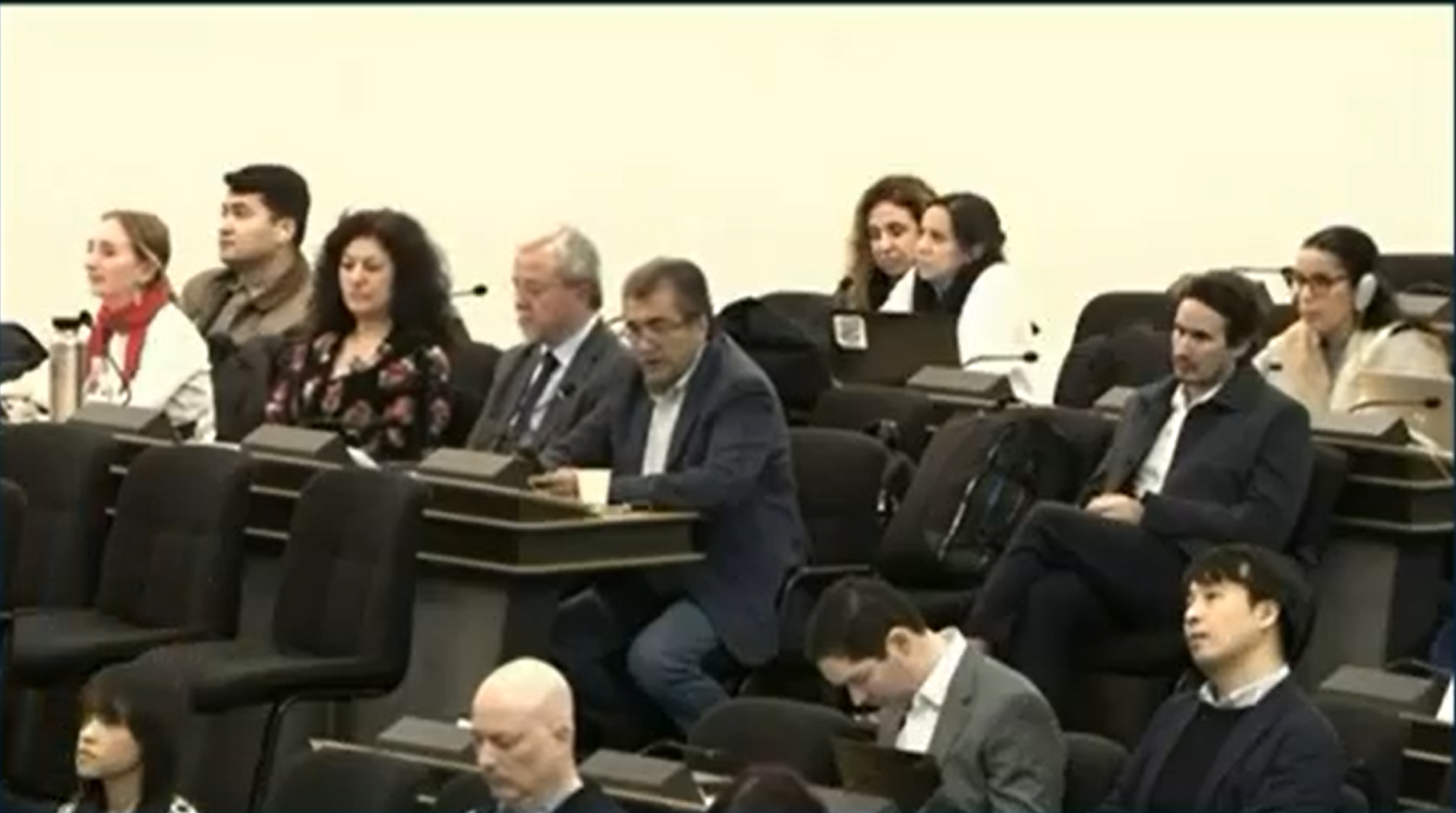
On November 25, 2026, at the 15th UN Forum on Business and Human Rights in Geneva, a Uyghur delegate presented the United Nations with a painful reality that has gone unaddressed for nine years. The Center for Uyghur Studies (CUS) Executive Director Abdulhakim Idris spoke of his own family, noting that 24 of his relatives – including his mother – have been missing since 2017.
Idris directed two critical questions to Mauricio Lazala, Chief of the Business and Human Rights Section at the UN Human Rights Office (OHCHR). First, since releasing its August 31, 2022 report, what concrete steps has the Office taken to monitor ongoing atrocities in the Uyghur region and hold China accountable? Second, is the Office continuing to actively investigate and document these violations, or has it yielded to China’s political and economic influence?
This essay examines these questions from the perspective of the Uyghur people. Its purpose is to review the actions taken by the OHCHR over the past four years and to evaluate whether those measures reflect the meaningful justice sought by Uyghur families who have lost their loved ones.
August 31, 2022: Findings in the UN’s Own Words
OHCHR’s “Assessment of the Xinjiang Uyghur Autonomous Region” was published on the final day of High Commissioner Michelle Bachelet’s term. The 46-page report documented extensive and systematic human rights violations against Uyghurs and other predominantly Muslim communities. Most significantly, it concluded that the scale of arbitrary and discriminatory detention “may constitute international crimes, in particular crimes against humanity.”
For the Uyghur community, the report confirmed under official UN authority what survivors and exiled advocacy groups had reported for years. The assessment deemed allegations of torture, ill-treatment, and sexual or gender-based violence to be “credible,” while also documenting widespread family separations and transnational intimidation aimed at silencing Uyghurs living abroad.
The report outlined clear recommendations for Beijing: immediately release all individuals arbitrarily detained, clarify the location of missing relatives to their families, repeal discriminatory national security laws, and investigate allegations of torture and forced labor. These recommendations form the foundation of Abdulhakim Idris’s inquiry: which measures have been implemented, and how has the OHCHR followed up on its own findings?
Four Years of Measures: Statements Without an Accountability Mechanism
A review of the record indicates that while the OHCHR has not been silent, its actions over the past four years have largely been limited to formal statements, diplomatic appeals, and private dialogues. The Office has not established a dedicated investigative mechanism, released a comprehensive follow-up report, or instituted formal accountability measures.
| Date | What Happened | What it means for Uyghurs |
| June 2026 | Türk expressed concern about China’s new Law on Promoting Ethnic Unity and Progress | The law further institutionalized policies eroding minority rights; concerns were not accompanied by formal enforcement actions |
| February 27, 2026 | At the 61st session of the Human Rights Council, Türk deplored the lack of implementation of human rights recommendations | The Office publicly acknowledged that four years had yielded minimal progress |
| September 2025 | At the 60th session of the Human Rights Council, Türk noted that expected progress “has yet to materialise,” omitting a direct reference to the 2022 report | The 2022 report went unmentioned during its third anniversary |
| February 27, 2025 | Described Thailand’s deportation of 40 Uyghurs to China as a clear violation of international law and requested disclosure of their status | Formal statements failed to prevent the forced return of the individuals |
| August 27, 2024 | Issued a statement noting that “many problematic laws and policies remain in place” two years after the report | The UN reiterated that systemic policy concerns persisted |
| May 26 – June 1, 2024 | An OHCHR delegation conducted discussions in Beijing regarding counter-terrorism and legal frameworks, without visiting the region | The team did not travel to the Uyghur region during the mission |
| From February 2023 | Engaged in bilateral discussions with Chinese representatives in Geneva | Details and outcomes of these meetings were not made public |
| December 2022 | High Commissioner Volker Türk committed to directly engaging with Chinese authorities | The Office prioritized diplomatic engagement over public investigative reporting |
This timeline offers a direct response to Idris’s initial question. While the OHCHR acknowledges that violations persist, it has not published a comprehensive public evaluation of the implementation of its 2022 recommendations.
In 2024, the Office stated that it was continuing to monitor the situation, but cited constraints such as limited access and fear of reprisals among individuals contacting the UN. For the Uyghur community, this highlights a significant challenge: while internal monitoring may continue, its findings are not consistently shared with affected families or the international community. For individuals searching for missing relatives, private diplomatic engagement without public reporting leaves critical questions unanswered.
Institutional Constraints and the Impact of Diplomatic Pressure
Idris’s second question highlights broader institutional challenges within the UN system regarding accountability and political dynamics.
Geopolitical dynamics have repeatedly shaped discussions in Geneva. In October 2022, the Human Rights Council voted 19 to 17 against holding a formal debate on the report’s findings, with 11 states abstaining. Beijing rejected the assessment as unfounded and declined to implement its recommendations during its Universal Periodic Review in July 2024. Additionally, several voting members supported Beijing’s position during Council sessions, narrowing the scope for formal multilateral action.
Faced with these political realities, the OHCHR’s engagement strategy has faced criticism. Reports from the Chinese Human Rights Defenders (CHRD) network suggest that the leadership prioritized bilateral dialogue with state representatives over formal public reporting mechanisms. In February 2026, 26 civil society organizations called on High Commissioner Türk to clarify his Office’s actions regarding human rights documentation in the region. Following China’s support alongside 143 other nations for Türk’s second-term appointment in July 2026, civil society groups reiterated their call for stronger independent reporting.
Conclusion: Moving From Documentation to Action
The 2022 report established a vital formal baseline of findings. However, four years later, human rights advocates emphasize that documentation must be accompanied by ongoing monitoring and implementation. To fulfill the report’s mandate, civil society and advocacy groups recommend that the OHCHR take the following steps:
- Publish a comprehensive, public update evaluating progress on the 2022 recommendations.
- Maintain systematic documentation by gathering witness testimony, tracking missing persons cases, and requesting updates regarding detained individuals.
- Encourage member states to support dedicated discussions and independent monitoring mechanisms within the Human Rights Council.
- Provide clear guidance for businesses to prevent forced labor within supply chains.
For families affected by detentions and disappearances – including figures such as Gulshan Abbas, a retired medical doctor imprisoned since 2018 – the ongoing lack of information remains a source of profound difficulty. The questions raised in Geneva reflect broader calls for transparency and active monitoring. To fulfill its mandate, the UN Human Rights Office must complement diplomatic engagement with sustained public accountability and concrete follow-up action.
Copyright Center for Uyghur Studies - All Rights Reserved