*Guest contribution by Ibrahim Abdulmajid
==================================================================
Advocating for the Uyghur cause presents challenges that extend far beyond immediate preventive measures such as applying diplomatic pressure and implementing practical support for survivors. Crucially, it also demands effective dissemination of reliable, academically rigorous knowledge that is readily accessible to the general public.
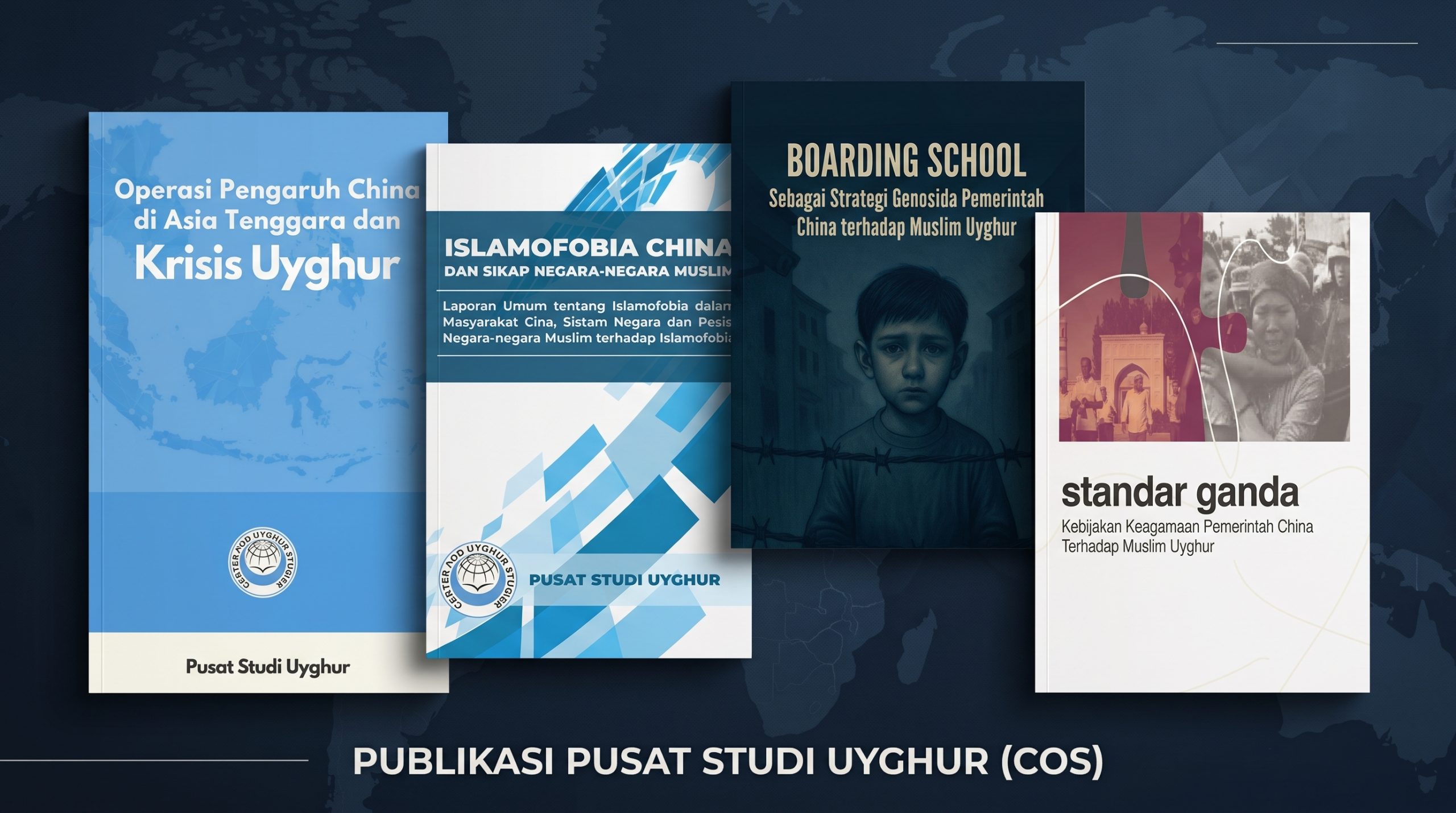
In this context, the Center for Uyghur Studies (CUS) deserves recognition for publishing numerous reports d analytical materials on the Uyghur issue in many languages including Bahasa Indonesia. The relative scarcity of alternative information sources on the topic has long hindered the Indonesian public from gaining an objective and balanced understanding of the situation. This challenge is further exacerbated by the Chinese government’s strategic use of disinformation and state propaganda designed to obscure its abuses and distort historical reality.
The Uyghur Issue and the Challenge of Knowledge Manipulation
A recent article by CUS Executive Director Abdulhakim Idris demonstrates how Beijing leverages historical narratives to reshape the knowledge and information regarding the Uyghurs and East Turkistan. Abdulhakim Idris identifies three central historical fabrications advanced in official Chinese state white papers:
First, China asserts that East Turkistan has historically been an integral part of Chinese territory. Second, it claims that the Uyghur people are a subgroup of the Chinese nation. Third, it frames Islam as a “foreign religion” imposed upon the Uyghurs.
Idris systematically refutes each of these state-sponsored claims through evidence-based historical analysis:
First, East Turkistan maintained political sovereignty independent of Chinese imperial dynasties for over a millennium, undermining the assertion that the region is historically Chinese territory.
Second, the Uyghurs are ethnically and linguistically distinct from the Han Chinese majority. Their language belongs to the Turkic language family, situating them firmly within the broader Turkic cultural world.
Third, the historical spread of Islam among the Uyghurs was a gradual, organic and peaceful process widely embraced across societal strata, disproving the claim that Islam is an external imposition on the region.
Knowledge Politics in Higher Education
The Chinese government has deployed extensive soft-power campaigns to shape international public opinion. In Southeast Asia, these operations specifically aim to influence civil society organizations and media outlets. Amid these influence operations, higher education provides a vital avenue for counter-advocacy. Engaging in knowledge politics within academia requires going beyond hosting occasional seminars; it demands integrating Uyghur studies directly into university curricula.
A strategic approach to knowledge politics involves mainstreaming Uyghur historical and contemporary studies within courses on Islamic history and global Muslim affairs. Because higher education curricula are regularly updated, there is a timely opportunity to embed scholarship on the Uyghurs into standard university coursework.
For example, Islamic higher education institutions in Indonesia could introduce units on Uyghur history into courses dedicated to Central Asian Islamic history or Turkic Islamic civilizations. Embedding these topics into formal study plans constitutes an effective form of academic advocacy, directly challenging Beijing’s systematic efforts to rewrite and assimilate Uyghur history into state-approved narratives.
Indeed, the Chinese state has already institutionalized its official historical narratives, integrating official textbooks into school curricula, police training programs, museum exhibits, and judicial proceedings. Countering this institutional strategy requires a sustained, collective effort to introduce accurate historical and contemporary perspectives on the Uyghurs to Muslim students globally through deliberate curricular integration.
Ultimately, producing alternative, objective publications is only the first step; ensuring that these insights are effectively communicated, learned, and understood requires dedicated pedagogical strategy.
* Ibrahim Abdulmajid is an Indonesian researcher and educator. He is currently pursing his PhD in social sciences.
Copyright Center for Uyghur Studies - All Rights Reserved